



 19 Views
 0 comments
The 2026 US midterm elections were held on Tuesday, November 3, 2026, marking a significant political event halfway through President Donald Trump’s four-year presidential term. Midterm elections are held every two years between presidential elections, allowing American voters to elect or re-elect members of Congress and several state-level officials. This year, voters decided the outcome of all 435 seats in the US House of Representatives, 35 Senate seats and 36 governorships. The elections resulted in a major Democratic victory, with the party gaining control of both chambers of Congress, marking a significant shift in the country's political landscape. Indian-American candidates also recorded a notable performance, with six securing victories in the elections: five winning seats in the US House of Representatives—Ami Bera, Suhas Subramanyam, Ro Khanna, Pramila Jayapal and Pia Dandiya—while Aruna Miller was re-elected as Maryland's Lieutenant Governor. These victories highlighted the growing political representation and influence of the Indian-American community in the United States.
US House of Representatives: Six Indian-Americans Win
All six Indian-American winners in the House are Democrats, a notable partisan pattern in a cycle where Democrats retook control of both chambers of Congress.
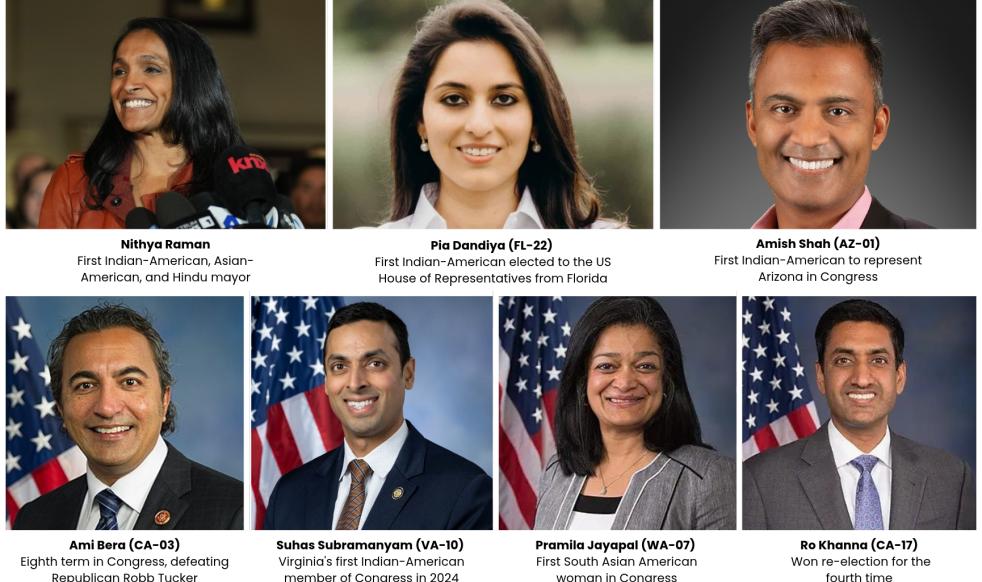
Pia Dandiya (FL-22) — The 39-year-old former high school principal and White House Fellow won Florida's newly redrawn 22nd District with 51.9% of the vote, defeating Republican Casey Askar, a Marine veteran. She is the first Indian-American (and first South Asian American) elected to the US House of Representatives from Florida. She is also the 10th Indian-American ever elected to Congress and only the second Indian-American woman in the chamber, after Pramila Jayapal. Born and raised in Palm Beach County to parents who immigrated from India, Dandiya had previously worked at Apple. She becomes the newest Indian-American congresswoman.
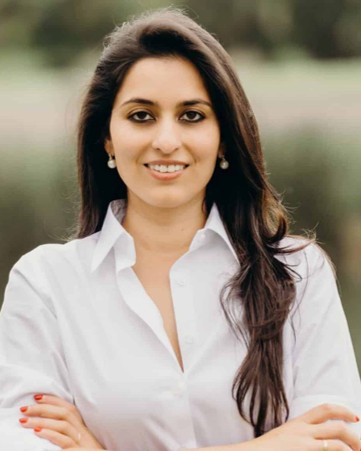
Amish Shah (AZ-01) — The 48-year-old emergency room physician made history as the first Indian-American to represent Arizona in Congress. Shah, a three-term former member of the Arizona House of Representatives, defeated Republican Jay Feely — a former NFL kicker endorsed by President Donald Trump — with 52.49% of the vote to Feely's 45.45%. Decision Desk HQ called the race at 8:39 p.m. EST on November 4. The seat was previously held by Republican David Schweikert, who retired to run for governor.
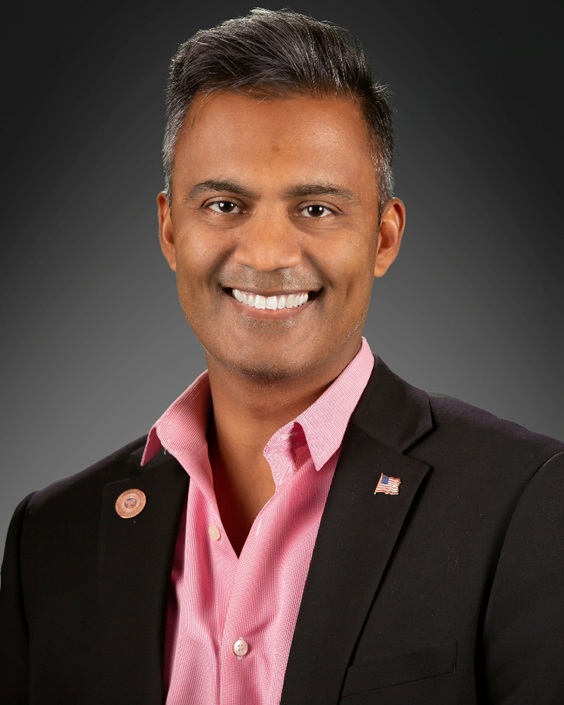
Suhas Subramanyam (VA-10) — The 40-year-old, who became Virginia's first Indian-American member of Congress in 2024, won re-election with 63.16% of the vote (173,106 votes) against Republican Dave Beckwith (34.66%, 94,990 votes) and independent Ahsen Malik.
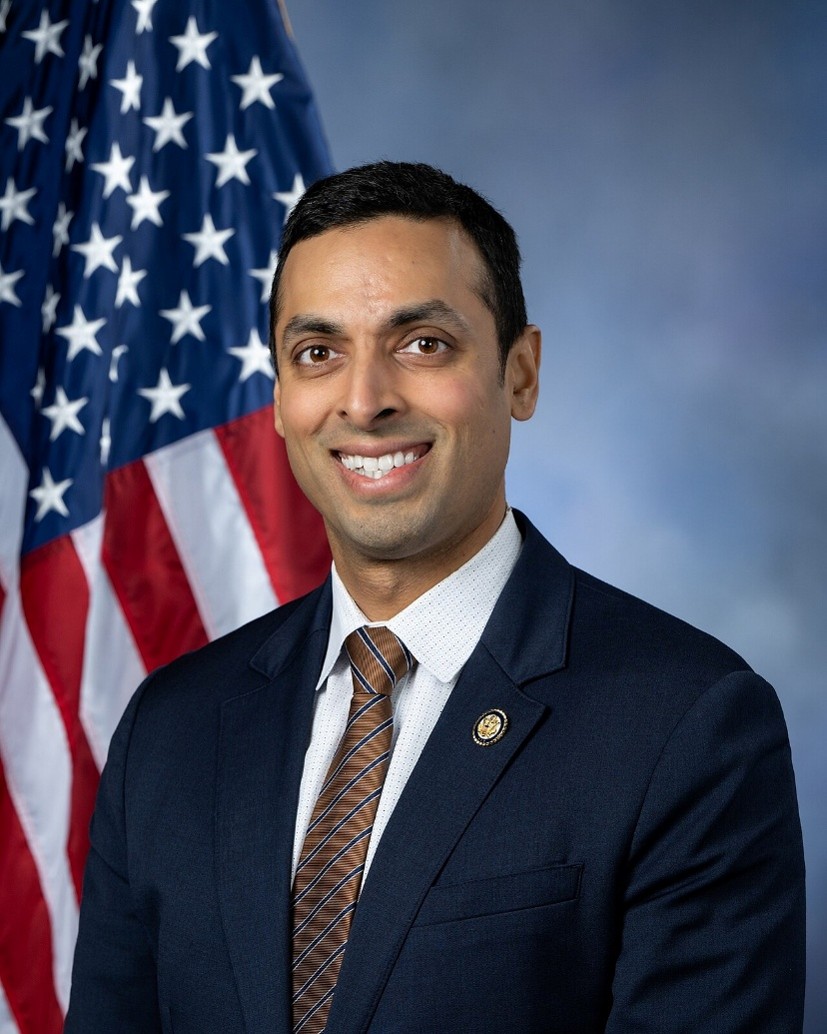
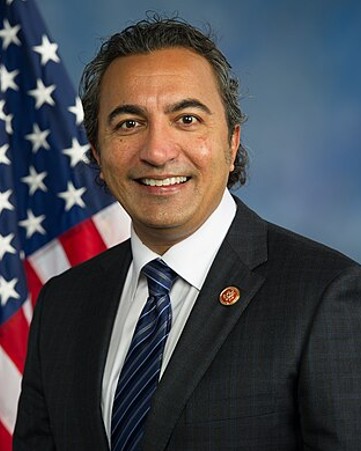
Ami Bera (CA-03) — The 61-year-old physician secured his eighth term in Congress, defeating Republican Robb Tucker. Bera remains the longest-serving Indian-American member of the House.
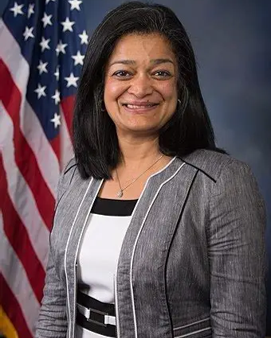
Pramila Jayapal (WA-07) — The first South Asian American woman in Congress, born in Chennai, secured her sixth term.
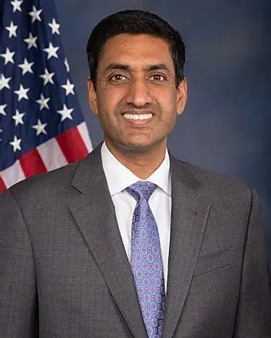
Ro Khanna (CA-17)— Won re-election in a race notable for having two Indian-American candidates — Khanna (D) and Republican challenger Ritesh Tandon — representing opposing parties.
Los Angeles: Nithya Raman Makes History
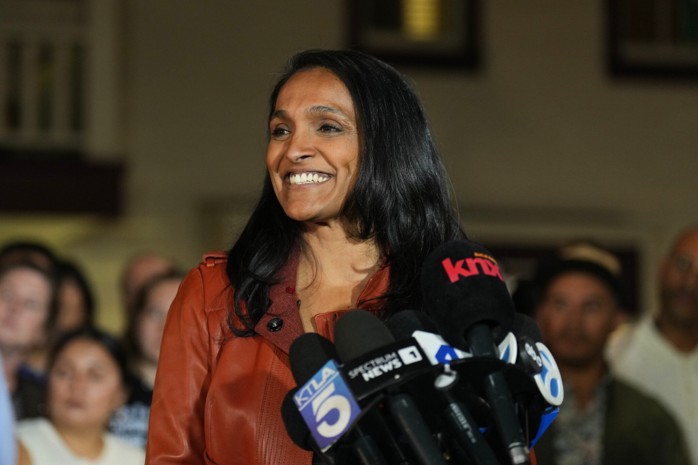
The most high-profile victory of the cycle for the Indian-American community came in Los Angeles, where Nithya Raman, a 45-year-old democratic socialist and city councilmember, defeated incumbent Mayor Karen Bass to become the city's first Indian-American, Asian-American, and Hindu mayor.
Raman, born in India and educated at Harvard University and MIT, secured 52.1% of the vote to Bass's 47.9% at the time of the concession (per AP), with final tallies showing a wider margin of 52.70% to 47.30%. Mayor Bass called Raman on Thursday, November 5, to concede.
The victory marks the first time since 2005 that an incumbent Los Angeles mayor has lost. Raman, who had publicly endorsed Bass just weeks before entering the race herself in February, campaigned on housing affordability, public safety, and homelessness. She will take office on December 14, 2026, as the 44th mayor of Los Angeles.
With her win, two of the largest American cities now have mayors of Indian descent — Raman in Los Angeles and Zohran Mamdani in New York.
Statewide & Local Wins
Aruna Miller — Maryland Lieutenant Governor (re-elected)
The 61-year-old, who became the first South Asian woman elected lieutenant governor in the United States, secured another term alongside Democratic Governor Wes Moore, defeating Republican Rob Krop.
Josh Kaul — Wisconsin Attorney General (3rd term)
Kaul, 45, defeated Republican Eric Toney, the Fond du Lac County district attorney, with **53.9%** of the vote to Toney's 46.1% (AP called the race at 10:41 p.m. with 85% counted). Kaul becomes the first Wisconsin attorney general elected to a third term since James Doyle in 1998. *(Sources: AP, WPR, Ballotpedia, Wisconsin Law Journal)*
Aparna Raj — Washington DC Council, Ward 1
The 32-year-old daughter of Indian immigrants won the Ward 1 council seat with 86% of the vote, defeating Republican Jett James Jasper (5%) and others. Raj, a democratic socialist and tenant rights organizer, becomes the first Asian-American member of the DC Council and one of its youngest members.
Notable Losses
Vivek Ramaswamy — Ohio Governor (R): Lost
The son of immigrants from Kerala, Ramaswamy lost Ohio's gubernatorial race to Democrat Amy Acton by over 200,000 votes, despite the endorsement of President Trump. Acton becomes the first woman elected governor of Ohio.
Mahesh Ganorkar (R) — North Carolina 4th Congressional District: Lost
Ganorkar lost to Democratic incumbent Valerie Foushee.
Broader Context
The 2026 midterms saw Democrats win control of both the House and Senate, taking Congress from the Republican Party. The Indian-American community, now numbering over 5 million in the US (the second-largest Asian-origin group), has seen its congressional "Samosa Caucus" grow to eight members with the addition of Dandiya and Shah to the existing group of Bera, Khanna, Jayapal, Subramanyam, Rashida Tlaib's colleague, and others.
The partisan alignment of all six House winners as Democrats mirrors the broader blue wave of the cycle, while Ramaswamy's decisive loss in a Trump-endorsed race underscored the political headwinds facing the president's party.