



 60 Views
 0 comments
For UK-based Non-Resident Indian, Poonam Tapre, completing the Narmada Parikrama was more than a pilgrimage. It became a journey of faith, surrender and self-discovery — one she now hopes will inspire the Indian diaspora to reconnect with India's spiritual heritage.
When Poonam Tapre left to walk around one of India's most sacred rivers, she knew the journey would test her physically. What she could not have anticipated was how profoundly it would change her understanding of herself, her faith and her purpose in life.
Based in the UK, Poonam undertook the traditional Narmada Parikrama earlier this year, walking an estimated 3,700–4,000 kilometers in around 106 days. She carried her own luggage, travelled through villages, forests and fields, and stayed in ashrams along the way. Her days were shaped by the demands of the road and the uncertainty of what lay ahead.
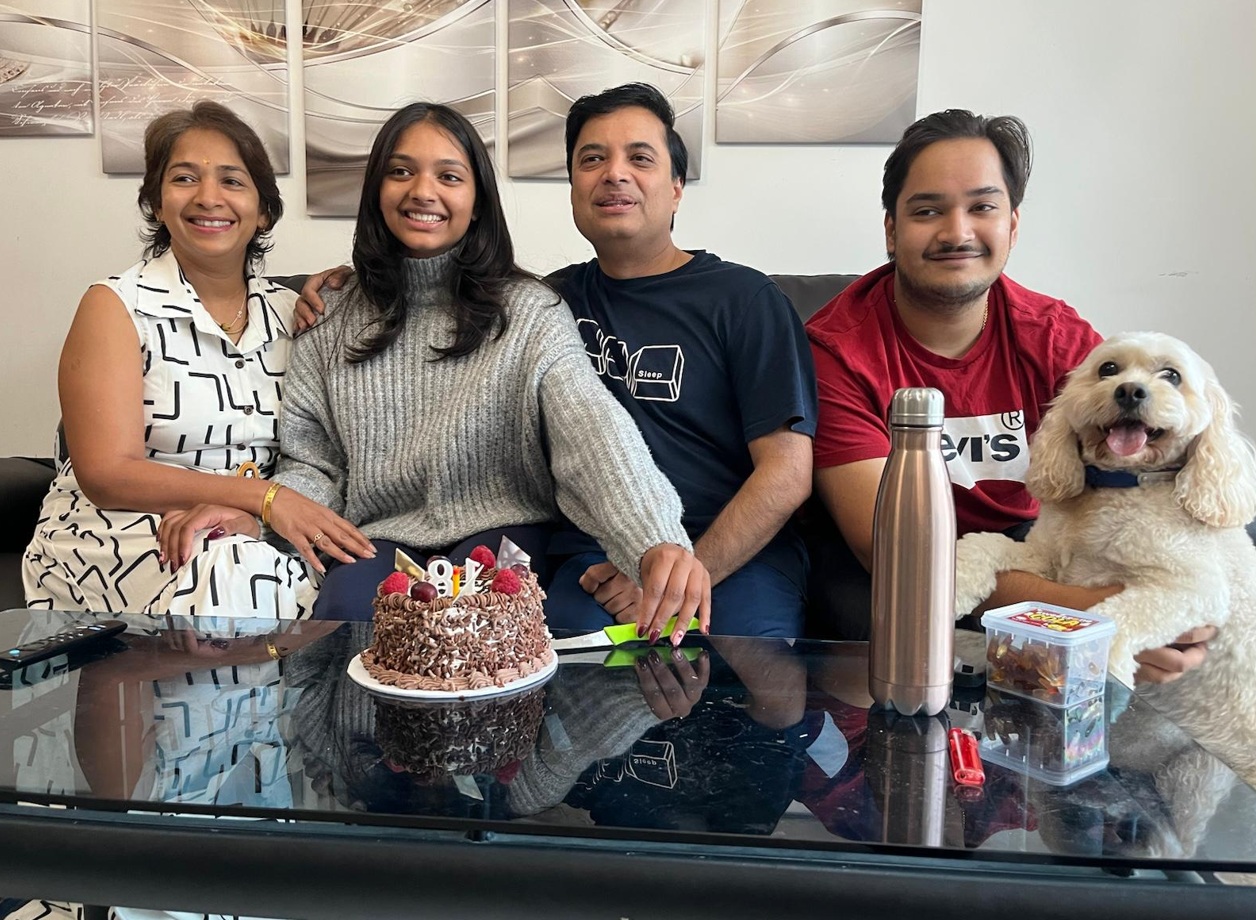
Poonam with her family
A river regarded as a living presence
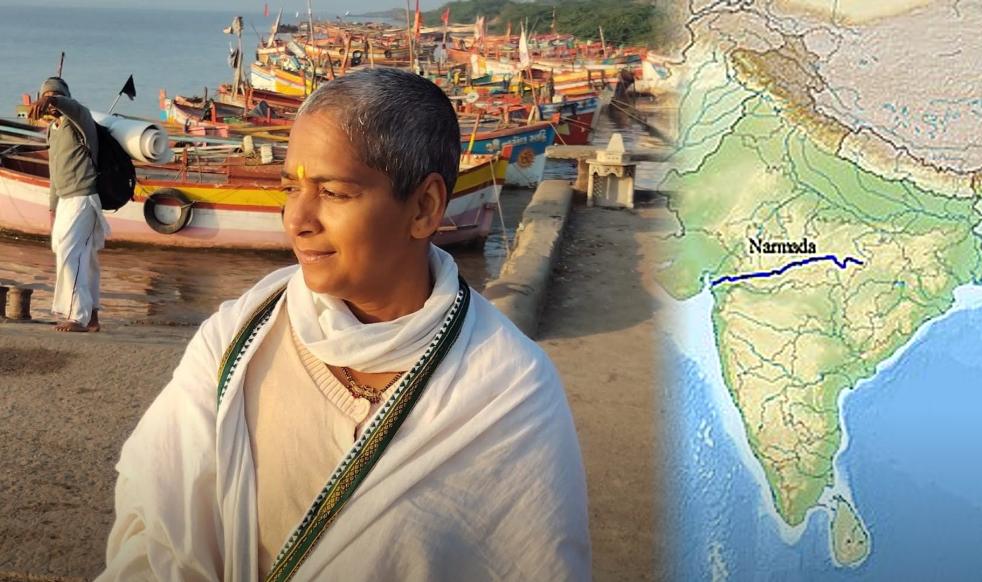
The Narmada flows westwards through central India, from Amarkantak in Madhya Pradesh towards the Arabian Sea in Gujarat. Its banks are dotted with temples, pilgrimage towns, villages and landscapes deeply woven into India's spiritual history.
For many Hindus, the river is not merely a natural landmark. She is Ma Narmada — Mother Narmada, a sacred presence to be revered.
The Narmada Parikrama is the circumambulation of the river, traditionally following one bank downstream towards the sea before returning upstream along the opposite bank. Depending on the route and customs followed, the pilgrimage can cover thousands of kilometers and take several months to complete.
Traditionally undertaken on foot, it calls for endurance, simplicity and a willingness to surrender familiar comforts. Pilgrims may sleep in ashrams or accept hospitality in villages, carrying what they need and depending on the kindness of people they meet.
For Poonam, this was not a holiday or a sightseeing expedition. It was an act of devotion — and an opportunity to discover what remained when the routines, possessions and expectations of ordinary life were stripped away.
But the distance, she says, was only part of the story. “The real journey was what happened to me along the way.”, she adds.
Her experience offers a window into a spiritual tradition that has endured for generations in India — and raises a question for Indians living around the world: what does it mean to reconnect with one's cultural and spiritual roots, not simply by remembering them, but by experiencing them?
Encounters she still cannot explain
It was early morning, around six o’clock, and still completely dark.
She had set out alone, carrying a torch whose battery was running low. Its beam illuminated only a few feet ahead. Beyond that, the road disappeared into darkness.
She was walking quietly, watching the path ahead, when suddenly she heard a voice.
The voice made her look up.
A woman was standing outside what appeared to be a small house or shop, sweeping the area in front of her.
She was surprised. Until that moment, she had not seen any lights to suggest that a house was nearby. She had been walking in darkness, with nothing around her that had caught her attention.
Yet there the woman stood.
She called out to her.
“Maiya, you are on the wrong side. Come this way.”
The pilgrim looked around, trying to understand what she meant. The road had split into two directions, and she was unsure which one to take.
The woman pointed towards the other side.
“But I am already on the left,” she replied.
The woman smiled gently.
“No. Cross over. This is your road.”
During the Parikrama, she had learnt to remain open to guidance. When walking along unfamiliar roads, often in darkness, a pilgrim must sometimes trust the people who know the way. So she followed the woman’s instructions and crossed to the other side.
As she continued walking, she noticed the lights of other pilgrims’ torches in the distance. They appeared to be on the road she had just left.
For a moment, she wondered whether she had made a mistake. Had she misunderstood the woman? Should she have stayed with the other pilgrims?
She kept walking, repeating “Narmade Har” under her breath.
Eventually, she reached a small house and asked a man whether she was on the correct Parikrama route. He confirmed that she was. He also told her that if she had continued along the other road, she would have walked almost twenty-one kilometers in the wrong direction.
She felt relieved. Silently, she thanked the woman who had guided her.
Later that day, another Parikramavasi sent her photographs of the exact junction. Many pilgrims had become confused there, and he wanted to make sure she had taken the correct road.
She opened the photographs and looked carefully.
Something did not make sense.
There was no house. No shop or courtyard.
No sign of anyone living there.
There were only trees, dense bushes and the route markers along the road.
She looked again, enlarging the photographs and trying to find the place where she had seen the woman. But she could not see anything that resembled what she remembered.
She could not understand it.
She remembered hearing the woman’s voice. She remembered looking up and seeing her. She remembered the woman pointing her towards the correct road.
Yet the photographs showed only the forest.
Even today, she cannot explain what happened that morning.
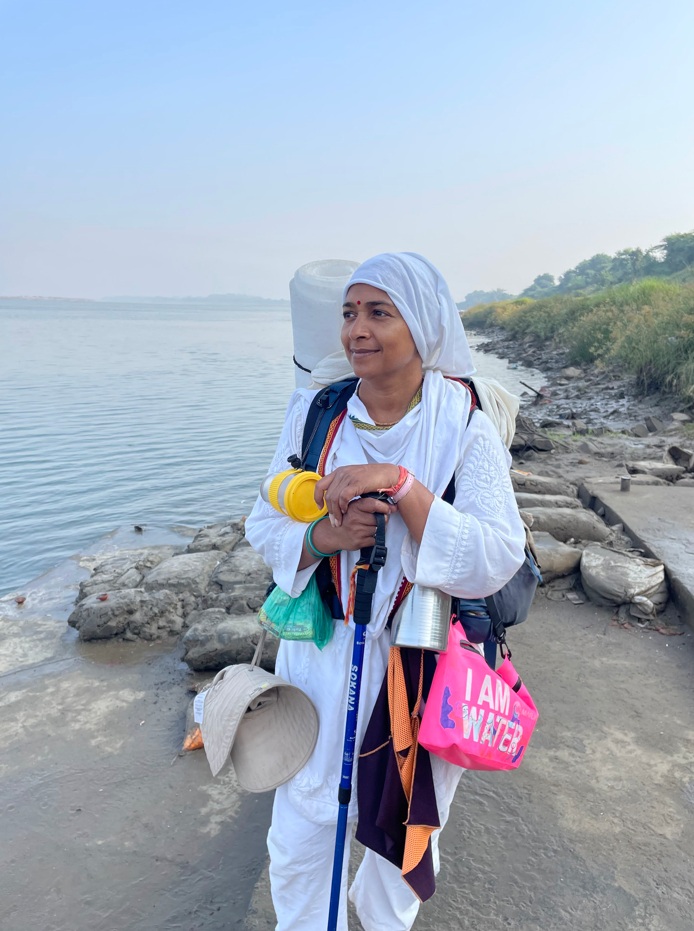
She does not know who the woman was or how to account for what she experienced. Perhaps there was an explanation she could not see. Or perhaps, for her, it was one of those moments when Maiya’s guidance came in a form she could never have anticipated.
Whatever the explanation, the experience stayed with her.
Until then, she had been learning to trust the people she met along the way. That morning gave her something more profound to reflect upon.
She had set out alone in the darkness, unsure of the road ahead. A voice had called her, and she had followed its direction. Only later did she discover something she still could not explain.
From that day onwards, she found it easier to trust that even when she could not see the entire path ahead, she did not necessarily have to walk it alone.
Discovering what really matters
It would be easy to imagine a pilgrimage as a long period of peace and contemplation. Poonam's account tells a more complicated story.
There was discomfort, fear and exhaustion. Plans did not always unfold as expected. The road demanded patience, and the next safe place to rest could not always be taken for granted.
There were also moments of extraordinary generosity. People with very little would offer food or assistance without expecting anything in return.
These encounters challenged Poonam's understanding of abundance. A person's wealth, she began to recognize, could not be measured simply by possessions or social position. Generosity, humility and the willingness to help a stranger could reveal another kind of richness.
The experience also encouraged her to reflect on identity and purpose. What happens when the usual markers of success — work, status, possessions and other people's opinions — temporarily fall away? What remains when the only task is to take the next step?
Poonam describes the journey as a profound awakening of the soul, one that helped her recognize a renewed sense of purpose. Completing the Parikrama did not mean she had found every answer. Instead, it gave her a different way of asking questions about how she wanted to live and what she wanted to contribute.
When she reached the end of the pilgrimage, the walking was over. The inner journey, she realized, was not.
Why this journey matters to the Indian diaspora
For Indians living abroad, cultural identity can be sustained through family traditions, festivals, food, language and visits to ancestral homes. These connections are meaningful, but they may not always provide an opportunity to experience the depth of the traditions passed down through generations.
A pilgrimage such as the Narmada Parikrama offers a different encounter with India.
It brings people into direct contact with the communities, landscapes, spiritual practices and everyday acts of kindness that make up the country's living heritage. It is not only a way of learning about tradition, but of experiencing how faith is practised and understood by people whose lives are shaped by it.
For younger generations in the diaspora, such stories can also open a conversation about what heritage means beyond ceremonies and inherited customs. Spirituality need not begin with certainty or end with a set of answers. It can begin with curiosity: a desire to understand, to reflect and to discover a personal connection with a tradition.
That does not mean the Parikrama is a journey everyone must undertake. Walking thousands of kilometers requires substantial physical preparation, time, planning and an understanding of the pilgrimage's customs. Nor will every pilgrim experience it in the same way.
But Poonam believes more people should at least know that this extraordinary journey exists — and have the opportunity to learn what it means to those who have undertaken it.
Guided by her gurus, she now hopes to share her experiences with the wider Indian community, particularly those living outside India. Through her storytelling, she wants to take people beyond photographs of temples and riverbanks and into the human experience of the Parikrama: the difficult days, unexpected encounters, moments of doubt and quiet discoveries that are harder to capture in an image.
Her intention is not to suggest that she has all the answers. It is to invite others to ask their own questions.
The journey continues
The Narmada Parikrama has a long history, but its significance is not confined to the past. For each person who undertakes it, the journey can carry a different meaning — an expression of devotion, a test of endurance or an opportunity to pause and reconsider the direction of life.
For Poonam Tapre, it became all of these things, and something more: a renewed sense of purpose that she now wants to share.
She began by walking beside a sacred river. Along the way, she encountered strangers who offered help, endured discomfort that tested her resolve and experienced moments that continue to resist easy explanation. Most importantly, she found space to listen to herself and deepen her connection with her faith.
Her story is a reminder that India's spiritual heritage is not simply something to preserve in memory. It is a living tradition, carried by people, places, practices and personal experiences — and one that can still speak to those who live thousands of miles away.
The question Poonam leaves with her readers is not whether they will walk 4,000 kilometers around the Narmada. It is whether they might make room in their own lives for a journey of discovery.
Because sometimes, the most important destination is not the place where the road ends, but the person we become along the way.